Thursday, September 10, 2026

Front porch reveries - Part II

Read Part I here.

As Pavana and I embark on what society in general recognizes as midlife, we have come to realize that the journey of life unfolds in distinct, decade long chapters, each offering its own joys and challenges, giving us the chance to grow and evolve. 

Our 20s were a period of exploration and trial. It was a time for forging an identity, testing inherited values, and discovering what we wanted from the world through somewhat romantic trial and error. We took higher risks, navigated entry-level careers, prioritized social connections, unburdened by the weight of heavy responsibility. 

Entering our 30s, our focus sharpened. We began narrowing our direction, learned to quietly detach from unsuitable patterns and heedless relationships to make room for deeper, more meaningful connections. This became the decade of nurturing our young family, striving toward financial stability, and gaining more clarity (hopefully?) in our careers. We also started realizing that our bodies demanded attention; as metabolism shifted and two beautiful lives were welcomed into our family, we woke up to the vital importance of self care, nutrition, and fitness. 

Now in our 40s, we are sensing a calling toward a season of influence, fulfillment, impact, and clarity. We are also sensing a poignant duality. As our girls grow, the looming reality of an empty nest draw closer. Somewhat sadly, also, our parents are aging, navigating their own fragilities and health challenges. The two of us are standing at the center of all this, profoundly feeling the quiet, elevated weight of holding up both generations.

This is the next phase, the very chapter Pavana and I entered about 3 years ago, and one we are still actively learning to navigate. Of course, our daily lives are beautifully defined by our girls - Medha, who has grown into a quiet, observant middle schooler, and Mira, who fills our days as a talkative elementary schooler. The 4 of us coexist in a mosaic of shared moments; weathering our collective share of wins and losses, celebrations, unexpected health glitches, riding the unpredictable waves of everyday life. 

Perhaps the most monumental milestone of this current decade was saying goodbye to the walls that witnessed our early years; we sold our first home and settled into our second. It feels particularly emotional to look back now, because exactly 6 years ago, I sat down to write about the profound role a home plays in our lives; how it serves as an anchor for forging and preserving the reminiscences that define us as we pass through these ever-changing chapters. 

And so, we continue to weave the mosaic of new memories within these walls. However, if you ask Pavana, she might tell you that the "new home romance" has a few fine-print (or boldface-print depending on the situation and mood) caveats. Specifically our garage situation. If you recall our growing dream-features list from the last time, we had four semi-non-negotiables - a front porch, a three-car garage, a walk-out basement, and a second-floor laundry. I am contractually obligated to report that our current scoreboard reads a 0.5 for 4.

Why you ask?

While we did triumphantly secure the second-floor laundry, the universe decided to keep us humble. Not only is our front porch only a "half" front porch, and is there no walk-out basement, but our garage situation actually regressed from a two-car to a single-car garage. I hope you get the mathematical drift! But despite the tight parking squeeze and the semi front porch, the memories we are building inside are as spacious as ever!


Thursday, August 8, 2024

The Law of Perpetuity of Dirty Dishes

Have you ever watched those chef types demonstrate their modus operandi for culinary nostrums via instructional videos shot carefully in phony looking kitchens?  If you have, you have no doubt felt disconcerted seeing the unconscionable aggregate of pots and pans they generate in the process.  I mean, the recipe in question is usually something ludicrously simple like daal tadka, and the dude goes, "iske liye aapko chaahiye 2 katori tuvar ki daal, 1 katori moong ki daal, 1 chhota chammach ghee, adha chhota chammach adrak lasun paste,  ek chhota chammach lal mirch powder, ek chota chammach haldi powder, ek chota chammach dhaniya powder, adha chhota chammach garam masala, adha chhota chammach jeera…" etc. while pointing at his table that is full of actual katoris and chammaches.  As if that weren't enough, he then proceeds to cook the daals in a separate cooker, fry the ek pyaaz kata hua, ek hari mirch kati hui, ek tamaatar bareek kata hua, etc. in a separate pan, make the tadka with the adha chhota chammach jeera in yet another separate pan, and then pour the finished daal into yet another separate bowl for "plating", leaving your empathetic self bleeding for the support staff who would ultimately be the ones doing the dishes!

That being said, let me say that it doesn’t really need a chef type with kitchenary intemperance to create a sink in a state of squalor.  It can and will inevitably happen in domestic circumstances as well.  All it needs is a sink.  Soiled pots and pans somehow generate themselves.  A classic case of “If you build it, they will come”.  Entropy.  It’s the law.  And the rate of entropy generation is somehow exponentially proportional to the number of kids.

I realize that by pitilessly mocking these chef types for their kitchenary intemperance, I might have given you the impression that our own domestic kitchen sink is always shipshape and devoid of pots and pans.  Sadly this remains a pipe dream that manifests only in my unlikeliest of hallucinations.  I have often wondered if it is truly possible to achieve a clean and empty sink in an environment with two kids with an uncanny knack for generating scads of dishes.  The more I think about it, the more I realize that it is like a limits to infinity problem.  A clean and empty sink, like infinity, is an idea that cannot be defined.  Just like infinity, we know we cannot reach it, but can still try to operate our lives with the mere premise of the idea, just like we can work out the value of functions that have infinity in them.  

Of horrors and thrills

In the mid 90s, I would often walk past a dreary, white and yellow building.  Owing to its location, the grimy structure had become a big part of my childhood.  Apollo Talkies, Rasta Peth, Pune was a landmark so well known that the adjoining bus stop, the chowk where it was situated, the cobbler and batata wada seller positioned in its vicinity, all were known by the title “Apollo”.  On the grimy front facade of the theater would dangle a large, singular, colorful poster of the picture running at theater at the time.  As if to mock the conspicuousness of the poster, a couple dozen handbills of the same film would adorn the grungy parapet wall that guarded Apollo’s perimeter.  One film that I particularly remember being screened at Apollo Talkies was Alfred Hitchcock’s 1960s horror film Psycho.  That a 60s motion picture was running at Apollo in the 90s was hardly a worthwhile thought back then because the poster of the film was enough to permeate the entirety of my adolescent brain.  A nude woman, censored just sufficiently by a steamed-up glass pane, with an outstretched hand that seemed to thrust out of the poster, surrounded by streaks of blood, and a monosyllabic “A” on the top left corner indicative of the censor certificate type, all screamed out tantalizingly to the deep-seated immorality narrative in my brain that was a product of orthodox upbringing.  Mind you, up until then, my only exposure to the horror/thriller genre was the Zee Horror Show.  As such, this was enticing stuff.

Fast forward a decade, the poster of another cinematic masterpiece adorned the grimy walls of Apollo.  At this point, I am not going to tell you the name of the picture, but only that it was starred in by not only a few GOATs of Hindi cinema but also a bunch of newcomers.  Multi-starrer, if you will.  I did not watch the movie at Apollo.  Actually, I don’t remember exactly where I saw it, but I have not forgotten the chills it gave me when I did.  The movie opens with a completely deserted remote-Indian-village railway station.  Out of nowhere, you suddenly spot three college age dudes, who are meeting for the first time.  One glance at their unsuspectingly happy faces immediately gives you that sinking feeling in your stomach, as if you know that something terrible is going to happen to them in the movie.  It turns out that all three have left home for the first time to attend college in the god forsaken village, which for some reason they willfully chose when applying.  As providence would have it, the boys discover that not only are all three in the same class, but are also roommates in the same dorm room.  The next scene is a college assembly, which in itself is such an unusual concept that it gives you the chills.  To make matters creepier, the only teacher present at the assembly is the college principal.  Not a single lecturer or professor is present.  The principal, speaking in an unusually low-pitched baritone, delivers a particularly sinister welcome address, which consists chiefly of a run-down of the college “rules”, viz. a no dating policy, a sundown curfew for students who might leave the campus, and a threat to get rusticated if the student disobeys even a single rule.  It is against this backdrop that the rest of the movie takes place.

Cut to a few scenes later, you have now come to realize that the college is basically a single building that looks like a haunted English manor surrounded by carefully manicured lawns.  The incongruity doesn’t end there.  There isn’t a single classroom in the manor.  Students are dismissed from classes sometime in the afternoon.  You can only assume that it is classes that they are dismissed from, because like I mentioned earlier, there isn’t a single lecturer or professor other than the principal a.k.a. the Baritone Bogeyman.  Essentially, a bell rings and students are dismissed from whatever takes place inside the manor.  When this happens, the students simply walk out.  No one knows where they go because the cafeteria and the dorm rooms are housed within the manor and there isn’t a single other building around.  In fact, the only structures other than the manor are an unusually large gazebo and a Durga temple, both of which are perpetually deserted.  Students wear uniforms.  You also realize that it is an all-boys institution, which basically makes the no dating policy totally homophobic.  You also realize that it is always autumn on campus.  Trees seem to constantly generate yellow leaves despite constantly shedding.  A menacing looking gate guards the mysterious campus.  

Enter, a guy who looks like a grown up Harry Potter, sweater draped on his shoulders, violin in hand.  As providence decrees (or common sense screams), the college needs at least one lecturer.  So our sweatered violinist walks into the principal's office and solicits for the job of "music teacher", thus setting a precedent for cold calling for a job.  Powered, no doubt, by some sort of voodoo magic, he convinces the Baritone Bogeyman of the dire need of music lessons at the institution.  Within due course, you learn that the sweatered violinist is actually a psychopath with a sinister plan to avenge the death of his lover.  He manages to set up a music class in the gazebo near the Durga temple and uses his black magic skills to instantaneously procure musical instruments, sheet music, and music stands for the students.  However you soon discover that music lessons are a mere facade.  The psychopath's plan is to brainwash the boys and use his powers to not only make them subvert the college rules but also instill in them vile and wicked, anti-social and amoral if you will, values.  He coerces the boys to date girls from the neighboring all girls college by encouraging them to stalk and publicly harass them, get employed at married womens' homes as music teachers and use that position of power to sexually harass the women, break existing relationships to "get at" the girls they want, and deliver hypocritical sermons about sanskaar.  To make matters creepier, there is also the ghost of the psychopath's late lover that keeps appearing, in a singular costume, throughout the film.

I still shudder when I remember the scenes of this film.  I'm sure you have seen the film too.  Here are some stills from the film.  These might jog your memory.


Tuesday, January 2, 2024

Pleonasms


If you grew up in India, pleonasms are no doubt deeply ingrained in your DNA.  A pleonasm is the use of multiple words in a phrase where only one would have been sufficient to convey the meaning.  If you are asking yourself what growing up in India has anything to do with pleonasms, I urge you to reminisce the moments when your English teacher taught you the art of writing formal letters requesting the addressee to "please revert back".  If you want to maintain that your English teacher was better than this, I can assure you that mine was more better.  As an added bonus, my science teacher would ask us to divide the solution into two equal halves and pour them into beakers to fill them to capacity, with an advance warning not to break them.

Let me prove to you that this is not my personal opinion.  Tell me, have you not received the message "Wrong PIN Number (Personal Identification Number Number)" on the LCD Display (Liquid Crystal Display Display) of the ATM Machine (Automatic Teller Machine Machine)?  And have you not been unexpectedly surprised when the kitchenware store in Ravivar Peth offered you a free gift when you bought multiple different kadhais?  And, isn't it a true fact that FC College (Fergusson College College) Road has some of the best eateries to pick and choose from? 

However, I was quick to learn that India isn't the only country with a propensity for pleonasms.  Pleonasms have already existed throughout American past history.  For instance, I found that the tuna fish sandwich is one of the most ubiquitous sandwiches across the US.  Sadly, I also learned that armed gunmen caused more deaths in America than did the HIV Virus (Human Immunodeficiency Virus Virus), and that made me wonder if the US was truly a safe haven for individuals fleeing persecution in their home countries, but I did understand the difficult dilemma faced by the authorities and why they couldn't simply issue a cease and desist order to stores selling firearms.  

But what convinced me that the concept of pleonasms wasn't a foreign import to the US was the announcement made by my pilot that were were flying over the Sierra Nevada Mountains (Snowy Mountains Mountains).  I couldn't wait for the airplane to fly cross the mountains, glide over the Mississippi River (Big River River) and the Ohio River (Great River River), and touchdown in my current mid-western domicile, so I could get some Indian food, particularly some Naan Bread (Bread Bread) and a cup of Chai Tea Latte (Tea Tea Milk), and plop myself in front of the TV to learn about some major breakthroughs on the CNN Network (Cable News Network Network).

Thursday, December 21, 2023

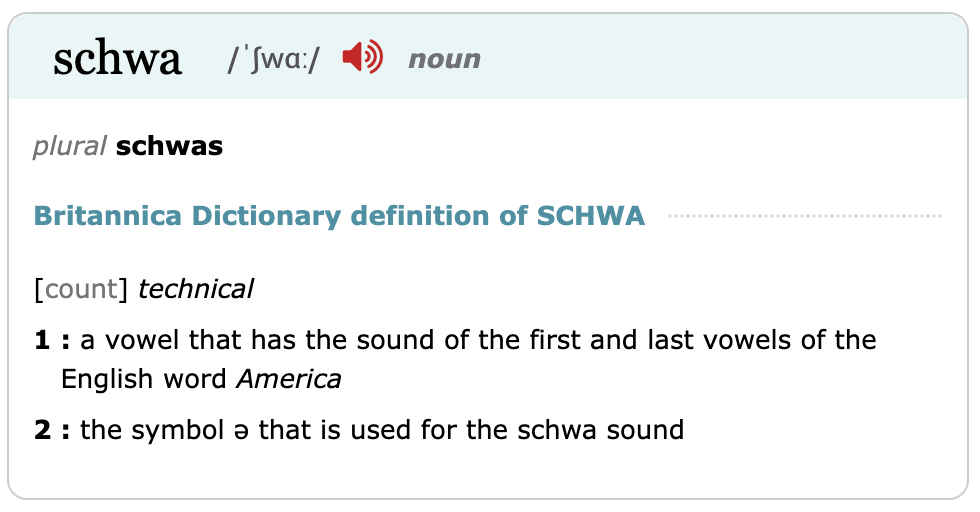
To Schwa, or not to Schwa


puNE (पुणे).  The Oxford of the East.  When the little boy asked the gentleman why Poona Club wasn't called puNE (पुणे) Club, the gentleman, true to his puNErI nature, gave the little boy an estoric reply.  The confused boy asked the gentleman to "say that again".  The pundit retorted impatiently: "मी  काय  कानाडीत  बोललो  का? (did I say that in kAnADI?)". 

kAnADI
(कानाडी), he quickly learned, was a language spoken in bELgAv (बेळगाव), a town on the border of Maharashtra and karnATak (कर्नाटक ).  

So, the little boy went to bELgAv (बेळगाव), karnATak (कर्नाटक ).  

This time, he learned from the local kAnADI (कानाडी) speakers that he was not in bELgAv (बेळगाव) but in beLagAvi (ಬೆಳಗಾವಿ), and that it was not in karnATak (कर्नाटक ) but in karnATaka (ಕರ್ನಾಟಕ).  The kindly beLagAvi (ಬೆಳಗಾವಿ)-ians urged the little boy to go visit other cities in karnATaka (ಕರ್ನಾಟಕ).  

So, the little boy decided to go to bengaLUru (ಬೆಂಗಳೂರು)karnATaka (ಕರ್ನಾಟಕ).

bengaLUru (ಬೆಂಗಳೂರು).  The Garden City.  India's Silicon Valley.  When the little boy stopped to buy a water bottle at a modest kirANi angaDi (grocery store), he asked the friendly shopkeeper how to say "water bottle" in kAnADI (कानाडी).  The mArwADI (मारवाड़ी ) shopkeeper quickly answered: "कन्नड़  गोत्तिल्ला (kannaD gottillA)".  Armed with the new knowledge that kAnADI (कानाडी) was called कन्नड़  (kannaD), he tried using it on a local bengaLUrian.  Unfortunately, the little boy was subject to ruthless censure.  "It is NOT कन्नड़  (kannaD)!", boomed the bengalUrian, "If you can't learn our language, at least learn to say it's name right!".  The poor boy countered with a "I'm so sorry!  The right name is kAnADI (कानाडी), right?".  It had to be, he thought, if it isn't B, then it has to be A!  Alas, this time he was met with heightened censure.  "How dare you!", thundered the angry bengaLUrian, "It's kannaDa (ಕನ್ನಡ)kan..na..DAAAaaaaa!  How would you feel if I said hind (हिंद) instead of hindI (हिंदी)!".  The little boy said he wasn't sure he he was supposed to feel.  "Okay...", the bengaLUrian faltered a little this time, "how about... how about if I said... um... tamiL (ತಮಿಳ್) instead of tamiLU (ತಮಿಳು)!"  

The little boy soon came to realize that bengalUrians called his beloved shrI rAm (श्री राम) rAma (ರಾಮ), and his favorite story, the mahAbhArat (महाभारत), was called the mahAbhArata (ಮಹಾಭಾರತ) here.  But if that was the case, why did his folks back north not say hind (हिंद) instead of hindI (हिंदी)?  Also, how come the bengalUrians said his friend amit (अमित)'s name correctly without changing it to amita (ಅಮಿತ)?  And which one was right, tamiL (ತಮಿಳ್) or tamiLU (ತಮಿಳು)?  In a super confused state, the little boy decided to visit a city that spoke tamiL (ತಮಿಳ್).  Or tamiLU (ತಮಿಳು).  He made a quick phone call home and asked his puNErI dad for recommendations.  "chEnnAi (चेन्नाई)!  It's in tAmiLnAD (तामिळनाड)", he said immediately.

So, the little boy went to chEnnAi (चेन्नाई)tAmiLnAD (तामिळनाड).

It wasn't long before the little boy learned that he was in chennai (சென்னை), not chEnnAi (चेन्नाई).  A particularly pious lady, whom he met at a temple, also advised him on the correct pronunciation of the language of the city.  "tamizh (தமிழ்)!", she said.  

The little boy was last spotted at a road side eatery somewhere on OMR (Old Mahabalipuram Road) eating "Gopi 65" (the "kogulized" version of gObhi (गोभी) 65), trying to pronounce zha (ழ).